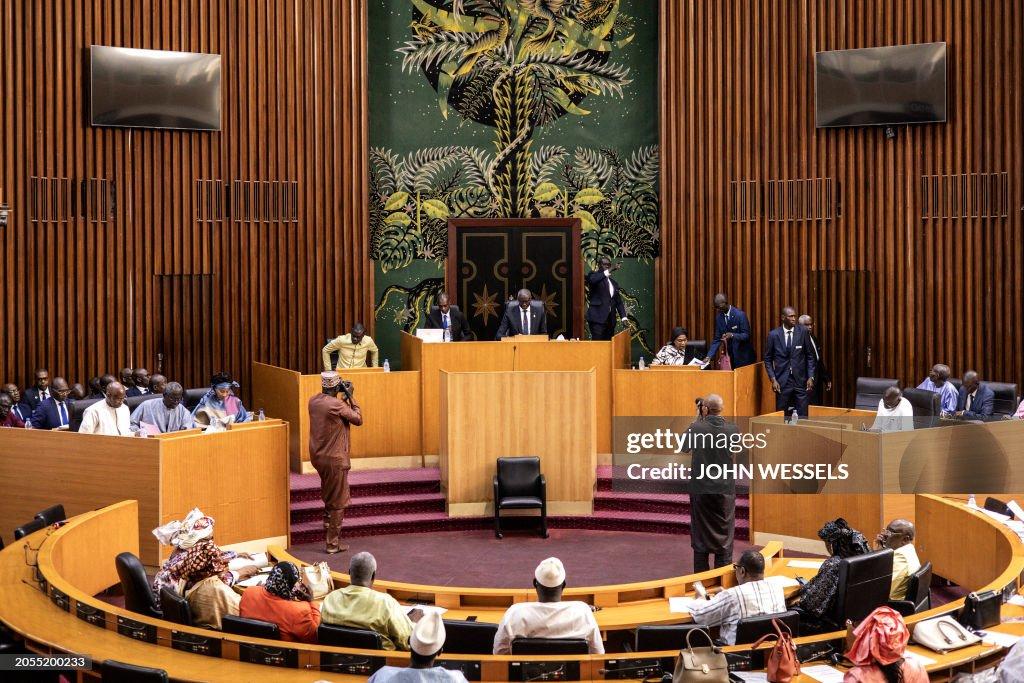
Senegal’s parliament has passed a controversial new law that significantly strengthens penalties for same-sex relationships and criminalizes efforts to promote homosexuality. The legislation was approved late Wednesday by the National Assembly of Senegal, marking one of the most sweeping legal moves against LGBTQ+ rights in the country in decades.
Lawmakers voted overwhelmingly in favor of the bill, with 135 votes supporting the measure, none opposing it, and three abstentions. The legislation now awaits the signature of Bassirou Diomaye Faye, Senegal’s president, before it can officially become law.
The vote fulfills a campaign promise made by the administration that came to power in 2024. The government is led by President Faye and Prime Minister Ousmane Sonko, whose political movement pledged to strengthen laws against homosexuality during the election campaign. Supporters of the legislation say the bill reflects Senegalese cultural and religious values.
Tougher penalties introduced
Senegal already had laws criminalizing same-sex relations under a long-standing provision of the country’s penal code. The statute, originally amended in 1966, imposed prison sentences of up to five years for what it described as “acts against nature.” Convictions under the law could also carry fines of up to 1.5 million CFA francs, roughly $2,700.
The new bill doubles the maximum prison sentence for same-sex sexual acts to 10 years, making it one of the harshest penalties in West Africa. In addition, the law increases the maximum financial penalty to 10 million CFA francs, significantly raising the stakes for those convicted.
Another key provision removes judicial flexibility. Under the new legislation, judges will no longer be able to issue suspended sentences or reduce prison terms below the established minimum penalties. Critics say this measure could lead to harsher and more inflexible sentencing.
The bill also expands the legal definitions related to “acts against nature.” According to the text, the term includes homosexuality, bisexuality, “transsexuality,” as well as acts such as zoophilia and necrophilia. By explicitly listing these categories, the law aims to clarify what behavior falls under the criminal statute.
Criminalizing promotion or support
Beyond criminalizing same-sex relations themselves, the new law also targets individuals or organizations that promote or financially support such activities. Those found guilty of promoting homosexuality, sponsoring related initiatives, or providing funding linked to such causes could face prison time.
Supporters of the legislation argue that the measure is intended to prevent the spread of what they view as foreign cultural influences. Many proponents claim that LGBTQ+ activism in Africa is driven by external pressure from Western organizations and governments.
Religious leaders have played a significant role in advocating for the bill. Imam Babacar Sylla, a prominent religious figure and leader of the network And Samm Jikko Yi, urged the president to approve the law quickly.
“The longer it takes, the more complicated it will be,” Sylla said after the vote. He also described people engaged in same-sex relationships as a public danger and warned that delays could allow them to avoid prosecution.
Public demonstrations in Dakar
In the weeks leading up to the parliamentary vote, supporters of the legislation organized demonstrations in Dakar, Senegal’s capital. Participants included lawmakers from the ruling African Patriots of Senegal for Work, Ethics and Fraternity (commonly known as Pastef), the political party that brought Faye and Sonko to power.
During the rallies, demonstrators chanted slogans such as “No to homosexuality!” and held placards with rainbow symbols crossed out. The protests reflected strong support among segments of the population for stricter legal measures against LGBTQ+ relationships.
Observers say the debate surrounding the law has also coincided with an increase in arrests related to suspected same-sex activity. In some cases, individuals have been detained under the existing “acts against nature” statute.
Surge in arrests reported
Human rights organizations say authorities have recently intensified enforcement of the law. According to International Federation for Human Rights, at least 27 men were arrested between February 9 and February 24 on suspicion of committing “acts against nature.”
Some of those arrested were also accused of “voluntary transmission” of HIV, which is a separate criminal offense in Senegal. Conviction for that charge can carry a prison sentence of up to 10 years.
Rights advocates warn that the new legislation could encourage further arrests and deepen discrimination against LGBTQ+ individuals in the country. Critics argue that the law may also increase stigma around HIV prevention and discourage people from seeking medical care.
Part of a wider regional trend
Senegal’s move is part of a broader pattern across parts of West Africa, where governments have recently introduced or considered stricter laws targeting LGBTQ+ communities.
In Burkina Faso, lawmakers passed legislation last year criminalizing same-sex sexual relations for the first time. The law imposes prison sentences of up to five years for individuals found guilty.
Meanwhile, lawmakers in Ghana are currently debating a bill that would increase the maximum penalty for same-sex sexual acts from three years to five years. The proposed legislation would also introduce prison sentences for anyone accused of the “wilful promotion, sponsorship, or support” of LGBTQ+ activities.
Supporters of these laws say they protect traditional social values. However, international human rights groups argue that such measures violate fundamental rights and could lead to widespread abuse.
Awaiting presidential approval
For now, the new Senegalese law remains one step away from taking effect. Once President Faye signs the bill, it will become official legislation and replace the existing provisions governing same-sex relations in the penal code.
The decision now rests with the president, whose administration promised during its campaign to adopt tougher measures addressing what it described as moral and social concerns.
If signed into law, the measure would place Senegal among the countries in the region with the strictest penalties for same-sex relationships and related activities, further intensifying the ongoing debate over LGBTQ+ rights across Africa.




 English
 Arabic
 French
 Spanish
 Portuguese
 Deutsch
 Dutch
Dutch
 Italiano
 Russian
 Romaian
 Portuguese (Brazil)
 Greek
Greek